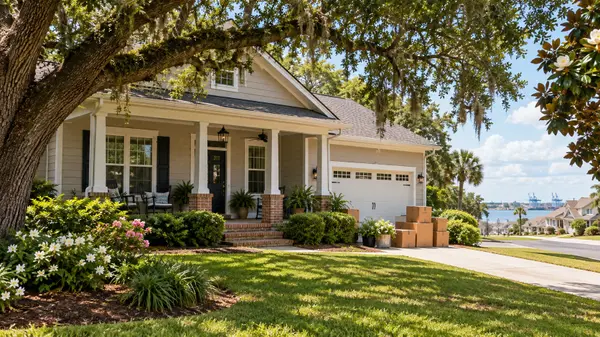
Selling and Buying at the Same Time in Gulfport, MS
Selling and buying at the same time in Gulfport, MS is completely doable, but it requires a clear plan, the right financing strategy, and a solid grasp of local market timing. Most Gulfport homeowners who pull it off successfully start by deciding which move to make first, then build a financial bridge to cover the overlap. This guide covers each strategy, what the current Gulfport market means for your timeline, and how to protect yourself at every step.
Why Gulfport's Market Conditions Shape Your Timing
The local market sets the rules of the game before you write a single offer. In Gulfport, median sale prices sit around $207,000. Meanwhile, Harrison County housing inventory data retrieved from the Federal Reserve Bank of St. Louis (FRED, August 2026) indicates that median days on market have climbed into the upper 70s as of July 2026.
What that means for you in practical terms: your current home will likely not sell overnight. Plan for a six to ten week selling window, possibly longer, and build that buffer into every offer you make on a new property. With Harrison County's median days on market climbing into the upper 70s, Gulfport's conditions lean toward a balanced market. In this environment, buyers have more room to negotiate, and sellers who are motivated to close are often willing to consider contributions toward closing costs, flexible dates, or modest price adjustments to keep deals moving forward.
The key takeaway for simultaneous movers: in Gulfport's current conditions, timing flexibility beats raw speed. Locking in that flexibility is what the strategies below are designed to do.
How to Sell First, Then Buy in Gulfport
Selling first means closing on your current home before making any offer on the next one. You know exactly what funds you have before you spend them, and you walk into your next purchase with cash in hand and no home-sale contingency hanging over your offer.
The tradeoff is a temporary gap in housing. Between your closing date on the sale and the closing date on the purchase, you will need somewhere to stay. In Gulfport, that typically means a short-term rental, an extended-stay arrangement, or negotiating a seller rent-back on your departing home.
Seller rent-back agreements are a useful tool here. After closing, you pay your buyer a daily or monthly rate to remain in the home for a defined period, typically 30 to 90 days. It costs money, but it eliminates the stress of moving twice and gives you a comfortable window to find and close on your next home.
Before deciding on a order of operations, homeowners can benefit from reviewing a detailed guide on the home selling process to understand what listing involves.
Who this works best for: Homeowners who want maximum financial clarity before committing to a new purchase, or those relocating from Gulfport to another market where they need cash certainty before shopping.
How to Buy First Using a Bridge Loan in Gulfport
A bridge loan is short-term financing secured against your current home's equity. It gives you the funds to cover a down payment and closing costs on your new property before your existing home sells, effectively letting you act like a cash-ready buyer.
According to the National Association of REALTORS®, average American homeowners saw their home equity grow by roughly $140,900 in the five-year period ending late 2025, giving many sellers a meaningful equity cushion to draw from. Bridge loans tap directly into that cushion.
A few things to know about bridge loans before you apply:
- Terms are short: Most bridge loans run six to twelve months. You repay the loan once your current home sells.
- Rates are higher than a standard mortgage: Bridge financing carries a premium for its speed and flexibility, a factor you weigh against the benefit of making a non-contingent offer.
- Equity requirements matter: Lenders generally want you to have significant equity in your departing home before approving a bridge loan.
- Qualification looks like a traditional mortgage: Your income, credit profile, and overall financial position all factor in, not just your equity balance.
Who this works best for: Homeowners with solid equity built up who have found their next home and do not want to lose it while waiting for their current property to close.
How to Use a HELOC Before You List in Gulfport
A home equity line of credit (HELOC) lets you borrow against your existing equity in a more flexible way than a bridge loan. You draw funds as needed up to an approved limit, pay interest only on what you use, and repay the balance once your home sells.
HELOCs tend to carry lower upfront costs than bridge loans. The catch is that most lenders will freeze or reduce your HELOC once you list your home for sale, so the key is to open and draw from the line before you put the property on the market. If you time this right in Gulfport's current market, you can have your down payment funds secured weeks before you need to write an offer on a new home.
Variable interest rates are a real consideration. If rates move during your transition period, your carrying costs shift with them.
Who this works best for: Homeowners who want lower-cost flexibility and have enough lead time to open the HELOC before listing.
Bridge Loan vs. HELOC
| Feature | Bridge Loan | HELOC |
|---|---|---|
| Structure | Lump sum upfront | Revolving line, draw as needed |
| Typical Rate | Higher than standard mortgage | Lower than bridge loan |
| Access Window | Available even after listing | Must draw before listing (lenders freeze access after) |
| Repayment | From sale proceeds | From sale proceeds |
| Best When | Home is already listed, funds needed immediately | Still in planning stage, home not yet on market |
When a Contingent Offer Makes Sense in Gulfport
A home-sale contingency means your offer to purchase a new property is conditional on your current home selling within a defined timeframe. If your home does not sell, you can walk away without penalty.
The financial protection is genuine. You do not carry two mortgages, and you are not exposed to bridge financing costs. The strategic risk is real, though: many sellers are reluctant to accept contingent offers, especially if they have non-contingent alternatives in hand.
In Gulfport's current market, contingent offers have more traction than they would in a faster-moving environment. Properties in the $180,000 and above range are seeing enough balance that sellers will not automatically dismiss a contingent offer, particularly if you pair it with a strong earnest money deposit, a short contingency window, and evidence that your current home is actively staged and priced to sell.
Who this works best for: Homeowners who want to minimize financial risk and are working in a price range and timeframe where sellers are willing to negotiate.
Strategy Comparison
| Strategy | When It Works Best | Main Tradeoff | Financing Vehicle |
|---|---|---|---|
| Sell First, Then Buy | Maximum financial clarity needed | Housing gap between closings | Sale proceeds |
| Buy First (Bridge Loan) | Strong equity, home already listed | Higher interest rate, short repayment window | Bridge loan |
| Buy First (HELOC) | Planning stage, home not yet listed | Access freezes once you list | HELOC |
| Contingent Offer | Balanced market, motivated seller | Seller may reject for non-contingent offer | Sale contingency |
How to Coordinate Both Closings
The goal is to have your sale closing land a few days before your purchase closing, so your proceeds move directly into the next deal without a financing gap. Here is what typically works in Gulfport:
Accept your sale offer with a 60-day closing window: This gives you enough time to find and negotiate on a new property without rushing.
Make your purchase offer with a closing date that lands a few days after your sale closes: You use your sale proceeds at the purchase closing without needing interim financing.
Negotiate a seller rent-back if the timelines slip: If your purchase closing gets pushed back, a rent-back on your departing home keeps a roof over your head and avoids a scramble for temporary housing.
Keep your lender updated in real time: Any change to your financial situation during the transaction period, including any new debt or job change, needs to go to your lender immediately. Pre-approval letters are conditional on the picture that existed when you got them.
Build buffer into every deadline: A 60-day closing can drift to 70 days. A contingency window can expire while your buyer is still working through their own financing. Plan for delays so you are not caught unprepared.
When modeling your numbers, taking advantage of a home mortgage calculation tool can help you see what your carrying costs look like if the two closings land a few days apart.
The Tax Side of Selling in Mississippi
Most Mississippi homeowners selling a primary residence owe no federal capital gains tax on the first $250,000 of gain (or $500,000 for married couples filing jointly), provided you have lived in the home for at least two of the five years prior to the sale.
Mississippi does not impose a separate state capital gains tax rate for residential property sales. Your net gain, if it exceeds the federal exclusion, is treated as ordinary income at the state level under Mississippi's income tax structure.
Consult a qualified tax professional for your specific situation. Tax rules change, and individual circumstances vary in ways that a general guide cannot capture.
What Gulfport Sellers Should Do Right Now
Before listing your property, taking five practical steps will help protect your timeline and your proceeds on both sides of the transaction:
- Get a current market analysis: Know what your home is realistically worth in today's market before you start shopping for a new one. Pricing too high in Gulfport's current environment will extend your days on market and put pressure on your purchase timeline.
- Assess your equity position: Understanding how much equity you have built up tells you which financing strategies are actually available to you.
- Talk to a lender before you list: Get pre-approved for your next purchase so you know your budget and can act quickly when the right property comes up.
- Declutter and prepare your home for photographs: In a market where buyers have options, presentation matters. Strong listing photos and clean showings reduce your days on market.
- Have a backup housing plan: Even if everything goes according to schedule, one party's delay can push your timelines apart. Know what you will do if that happens.
Selling and buying at the same time in Gulfport does not have to be stressful. With a tailored strategy and an experienced local team on your side, you can coordinate both transactions with confidence. If you're exploring property options or planning your next step, our Gulfport, MS investment and real estate guide can help you evaluate your strategy. Whenever you are ready, feel free to book a consultation with our local team to map out your home transition step by step.
Frequently Asked Questions
-
What is the biggest risk of selling and buying at the same time in Gulfport?
Timing mismatches between your two closings are the most common pressure point. Carrying two mortgage payments, even briefly, can strain your budget and complicate your lender's calculations on the purchase side. Building buffer into your closing windows and lining up a contingency housing plan are the most effective ways to manage that risk without overcomplicating the transaction.
-
Should I sell my Gulfport home before I start looking for a new one?
Your financial position and your tolerance for uncertainty are the two deciding factors. Selling first delivers clarity about your proceeds and lets you make a clean, non-contingent offer on your next home, though it does require interim housing between closings. If you have strong equity, a bridge loan or HELOC can let you purchase first and skip the housing gap entirely. There is no universally correct sequence; the right answer is the one that matches your financial picture and your timeline.
-
How does a bridge loan differ from a HELOC when selling and buying simultaneously?
Both draw on your home equity, but they work differently in ways that matter for timing. A bridge loan delivers a lump sum upfront, generally at a higher interest rate, and remains accessible even after your home is listed. A HELOC is a revolving line you draw from as needed, usually at a lower rate, but lenders typically freeze access the moment your home goes on the market. In practical terms: if your home is already listed and you need funds now, a bridge loan is often the more accessible path. If you are still in the planning stage and your home is not yet listed, a HELOC can get you there at a lower cost.
-
Can I make a contingent offer in Gulfport's current market?
Yes, and Gulfport's current conditions give contingent offers genuine traction, particularly in the mid-range price tier where sellers face more competition for qualified buyers. With Harrison County's median days on market running in the upper 70s as of July 2026, sellers are more motivated to work with serious buyers than they would be in a fast-moving market. Pairing a contingent offer with a larger earnest money deposit, a short contingency window, and documentation that your current home is actively prepared and priced for sale can make a meaningful difference in how a seller receives it.
-
What should I do first if I want to sell and buy at the same time in Gulfport?
Start by building a realistic picture of your current home's market value and your equity position. Those two numbers together tell you which strategies are actually within reach and what price range you can confidently shop in. From there, talk to a lender about what you qualify for on the purchase side. Taking those steps before you list your home or write an offer on a new one puts you in a much stronger position on both sides of the transaction.
Recent Posts